The Town of Niagara-on-the-Lake is continuing its commitment to protecting natural areas and maintaining safe municipal infrastructure through targeted vegetation management activities this summer.
As part of this work, the Town will be undertaking selective herbicide applications to control invasive phragmites in designated areas and vegetation growing around municipal guiderails where appropriate.
"Council is committed to protecting Niagara-on-the-Lake's natural environment while ensuring our public infrastructure remains safe and well maintained," said Lord Mayor Gary Zalepa. "Using an Integrated Vegetation Management approach allows the Town to address invasive species responsibly, support long-term environmental stewardship, and maintain safe roadways for everyone."
Why is targeted herbicide application necessary?
The Town follows an Integrated Vegetation Management (IVM) approach, which means non-chemical methods are considered first, and herbicides are only used where they are determined to be the safest, most effective, and environmentally responsible option.
For invasive phragmites (Phragmites australis), herbicide application is recognized as an industry best practice for established infestations because the extensive underground root system (rhizomes) often survives cutting or mowing alone. Manual or mechanical digging is not recommended as a control method because invasive phragmites can break easily, leaving behind small plant fragments that may regenerate and spread to new areas. When appropriate, herbicide treatments may be combined with cutting or other management techniques to improve long-term control and reduce regrowth.
Similarly, vegetation around municipal guiderails may require targeted management to maintain visibility, preserve roadside infrastructure, and improve safety for motorists.
Protecting the Environment
When herbicide application is required, the Town ensures all work is completed in accordance with applicable legislation, environmental requirements, and industry best practices. All herbicide applications will:
- Be completed by qualified, licensed applicators.
- Comply with the Pesticides Act, all applicable regulations, and industry best practices.
- Use only products registered and approved for the intended application.
- Follow product label requirements and environmental protection measures.
- Be applied only where necessary and under suitable weather conditions to minimize drift and maximize effectiveness.
- Be limited to targeted treatment areas rather than broad-scale applications.
- Avoid sensitive areas wherever possible and incorporate appropriate buffer distances as required.
The Town remains committed to using the most appropriate vegetation management practices while balancing environmental stewardship, public safety, and long-term invasive species control.
"Managing invasive phragmites and maintaining vegetation around municipal guiderails are important components of protecting both our environment and our transportation network," said CAO Nick Ruller. "Licensed professionals carry out these targeted treatments in accordance with provincial legislation and industry best practices. Our goal is to deliver this work safely, responsibly, and with the least possible impact while supporting long-term environmental stewardship."
Frequently Asked Questions
What are invasive phragmites?
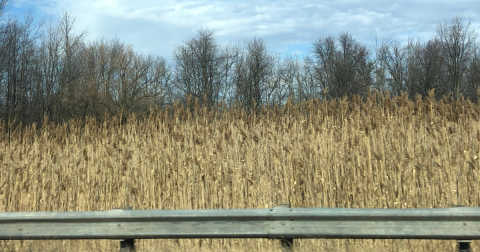
Invasive phragmites are a non-native perennial grass that spreads aggressively through underground rhizomes and seeds. Dense stands can damage infrastructure, block sightlines, impede drainage, crowd out native plants, reduce wildlife habitat, increase fire risk due to the accumulation of dry plant material, and can spread rapidly into neighbouring properties if left unmanaged.
What is a guiderail?
Guiderails are roadside safety barriers designed to help protect motorists by reducing the risk of vehicles leaving the roadway or entering hazardous areas. Vegetation around guiderails is managed to maintain visibility, allow proper inspection and maintenance, and ensure these safety features continue to function as intended.
Why can't the Town cut or mow phragmites?
While cutting may temporarily reduce the height of phragmites, it does not eliminate the extensive underground root (rhizome) system that allows it to regrow quickly. Targeted herbicide treatment is effective because it is absorbed through the leaves and moves into the roots, helping to control the entire plant and reduce future regrowth. This approach is recognized as a best practice for managing established phragmites infestations. For more information on phragmites' best management practices, please visit the Invasive Species Centre or Ontario Invasive Plant Council.
Is herbicide the Town's first choice?
No. The Town follows an Integrated Vegetation Management approach, which considers prevention and non-chemical methods first. Herbicides are used only when they are determined to be necessary and represent the most effective long-term solution.
Is the herbicide safe?
All products used are approved by Health Canada's Pest Management Regulatory Agency (PMRA) for their intended use. Applications are completed by licensed professionals who follow strict federal and provincial regulations, including product label requirements designed to protect people and the environment.
Why is vegetation controlled around guiderails?
Vegetation growing around guiderails can reduce visibility of roadside safety features, interfere with inspections and maintenance, and make repairs more difficult. Targeted vegetation management helps ensure roadside infrastructure continues to function as intended while maintaining safe travel corridors.
Will all roadside vegetation be sprayed?
No. Treatments are targeted only to specific areas where vegetation management is necessary. The Town does not undertake blanket applications and strives to minimize herbicide use whenever practical.
How can residents help?
Residents can help by learning to identify invasive phragmites, reporting new infestations on municipal property, and managing plants on their own property where practical. Early detection and coordinated management are key to slowing its spread and protecting Niagara-on-the-Lake's natural environment. Any sightings can be reported using EDDMapS, iNaturalist, or by contacting kassie.burns@notl.com.
For more information about the Town's vegetation management program, please contact the Public Works and Infrastructure Services Department.
For immediate alerts, follow the Town of Niagara-on-the-Lake on Facebook and Instagram. Subscribe to receive Town news directly in your inbox.
Media Contact:
Marah Minor, Corporate Communications Lead
905-468-3266 | communications@notl.com